
Steve’s Lock, Safe and Alarm
Safe won’t open? Keypad dead, beeping, or locked out? Find the picture that matches the lock on your safe and tap it. Each guide shows how to open the safe, change the battery, change the code and what the beeps and lights mean, with a link to the manufacturer’s full instructions.
- 1. Match
Look at your safe’s keypad or dial and find the closest picture below. - 2. Tap
Open that lock’s guide. The page tells you what your model looks like so you can be sure. - 3. Follow
Step-by-step instructions, plus the official manual to download.
Before anything else, check these three things
- Fresh alkaline batteries. Weak batteries are the most common reason a keypad safe will not open. Use new alkaline batteries, not rechargeables or old ones from a drawer. We recommend Procell.
- Handle position. On many locks, pressure from the safe’s bolts on the lock bolt stops it from retracting. Turn the handle fully to the locked position, then enter the code again.
- Don’t keep guessing. Most electronic locks shut down for several minutes (sometimes 15) after a few wrong codes. Wait it out instead of pressing more keys.
AMSEC
AMSEC safes use these keypads, with a C key to clear and a # key to enter.
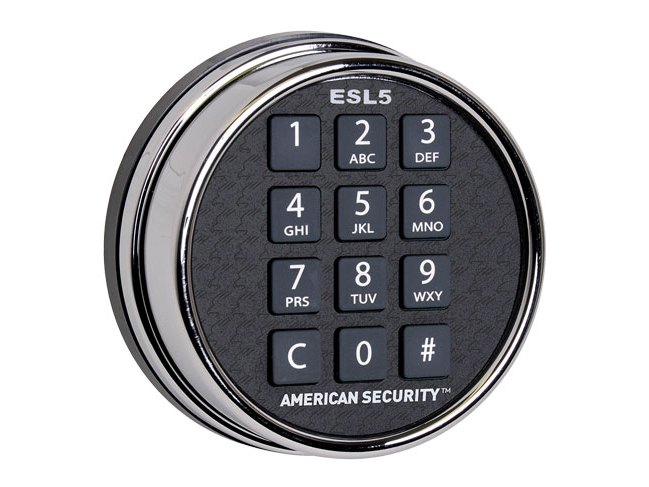 AMSEC ESL5 (round keypad)Round, backlit keys, C and # keys. One 9-volt battery.Battery · Code · Beeps →
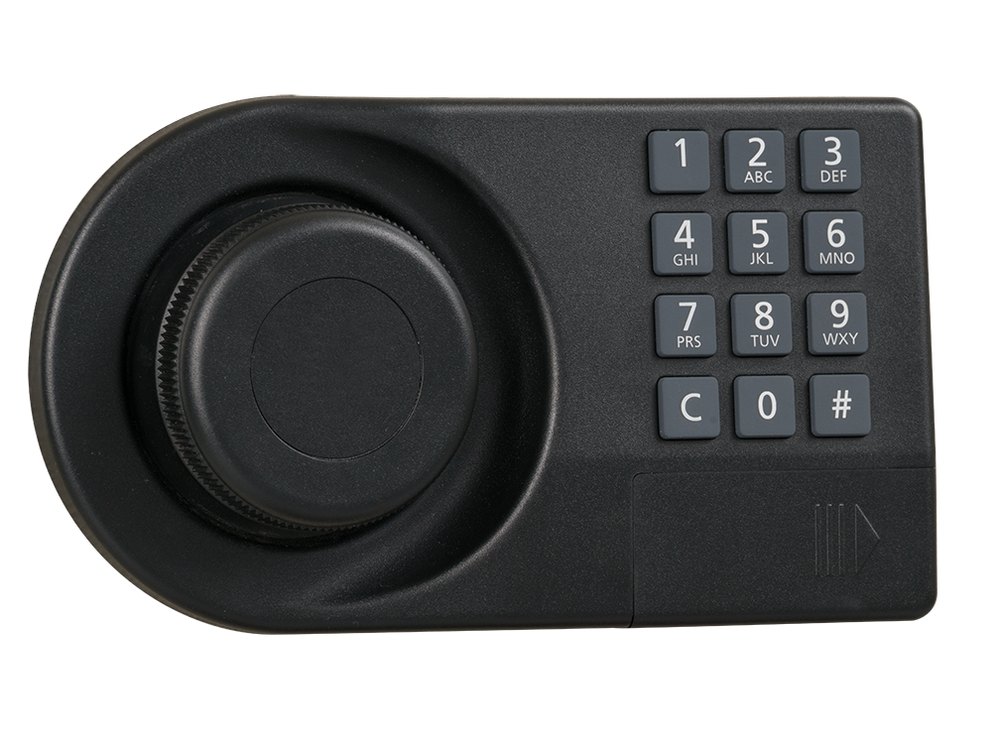 AMSEC ESL5LP (long keypad)Long keypad with a built-in handle. One 9-volt battery.Battery · Code · Beeps →
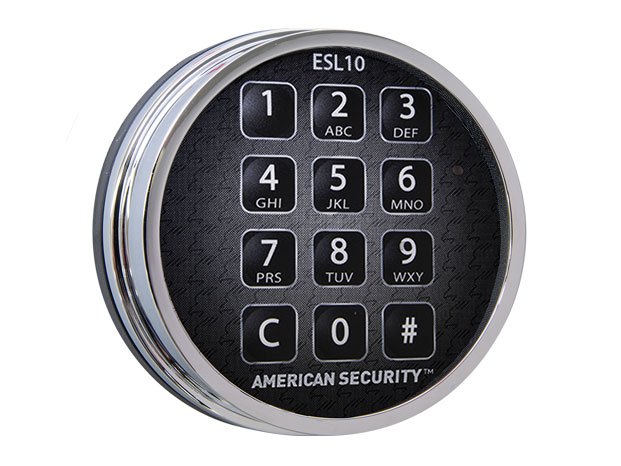 AMSEC ESL10 / ESL10XLRound, C and # keys, red light. Two 9-volt batteries.Battery · Code · Beeps →
Sargent & Greenleaf (S&G)
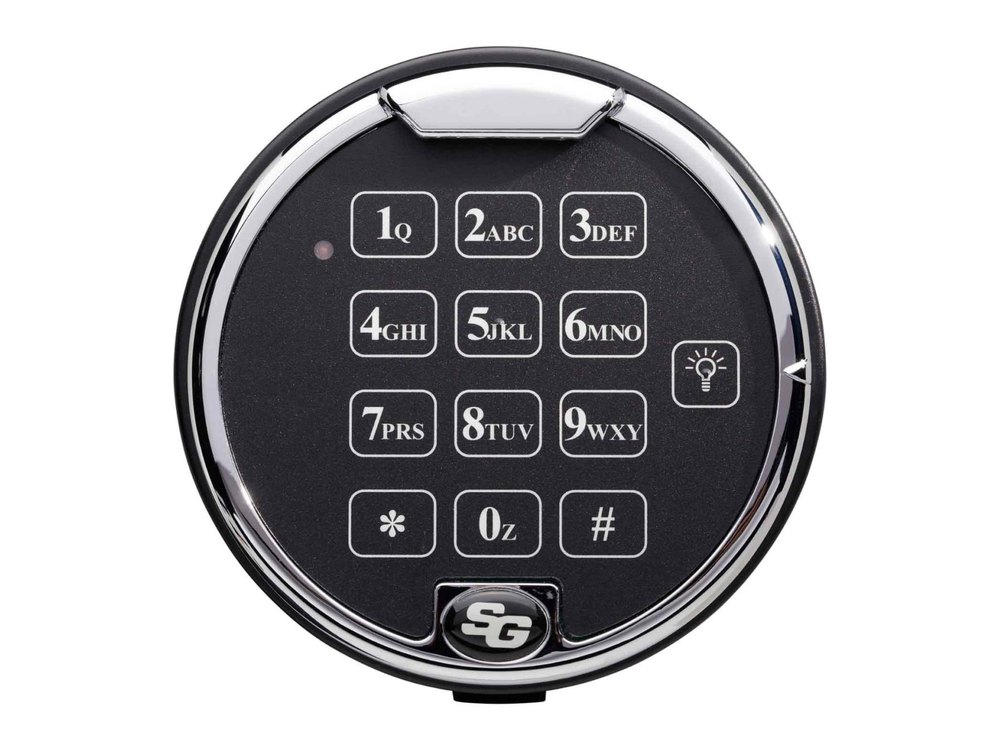 S&G 6120Round keypad with letters and the S&G logo. Two 9-volt batteries.Battery · Code · Beeps →
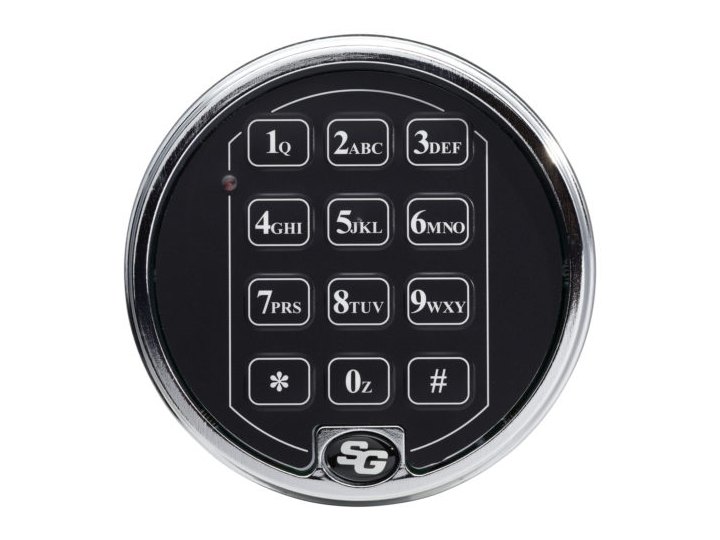 S&G 6120 (satin chrome)The same keypad with a satin chrome ring.Battery · Code · Beeps →
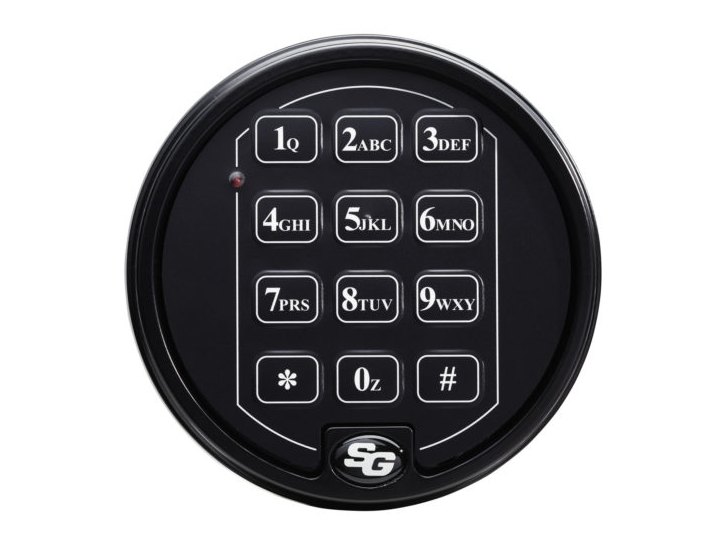 S&G 6120 (matte black)The same keypad in matte black.Battery · Code · Beeps →
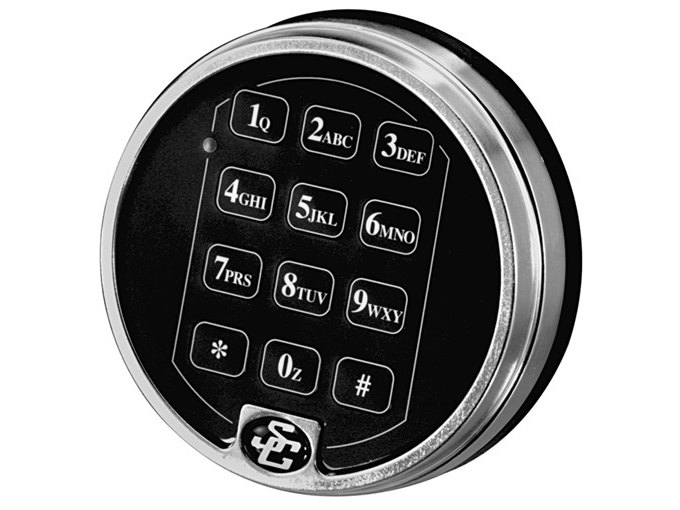 S&G 6126 / 6127 Audit LockSame style of keypad, but you enter a 2-digit position first.Battery · Code · Beeps →
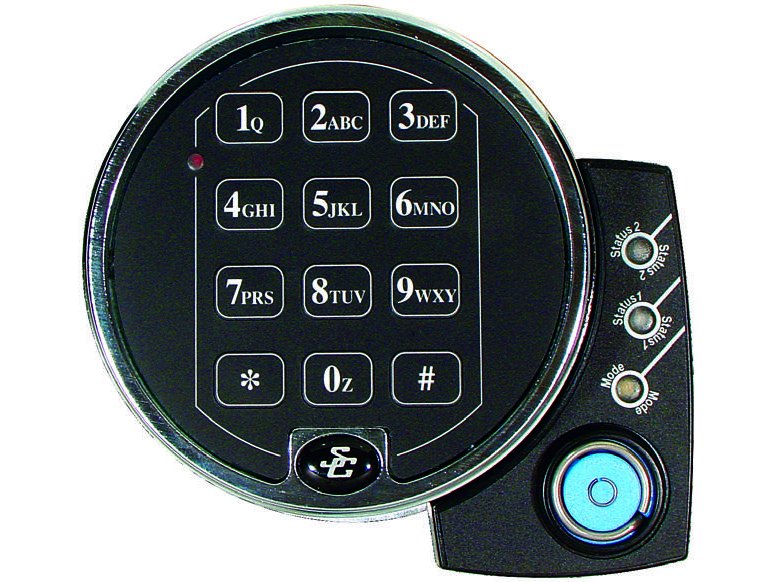 S&G 6126 / 6127 with extension baseA side unit with lights and a touch-key port.Battery · Code · Beeps →
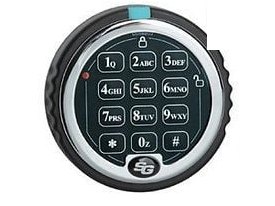 S&G Spartan (D-Drive and Swing Bolt)Round keypad with a blue tab at the top and a red light at the upper left. 9-volt battery.Open · Code · Battery →
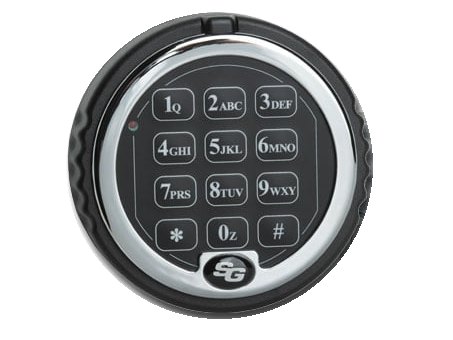 S&G Titan (2006 / 2007)Round keypad with a chrome ring, 12 keys and the S&G logo at the bottom. One 9-volt battery.Open · Code · Battery →
Securam
Securam makes the keypad locks inside many home and office safes. Find the one that looks like yours: some have no screen, some have a screen, and some read fingerprints.
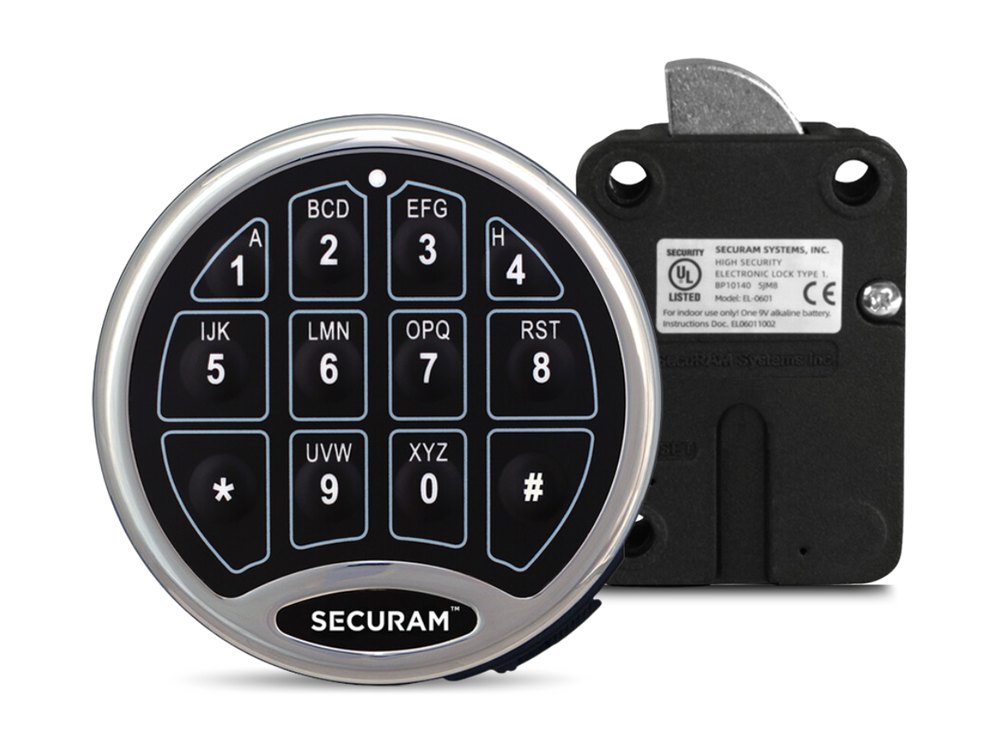 Securam SafeLogic Basic (silver)Round keypad with no screen. One 9-volt battery.Battery · Code · Beeps →
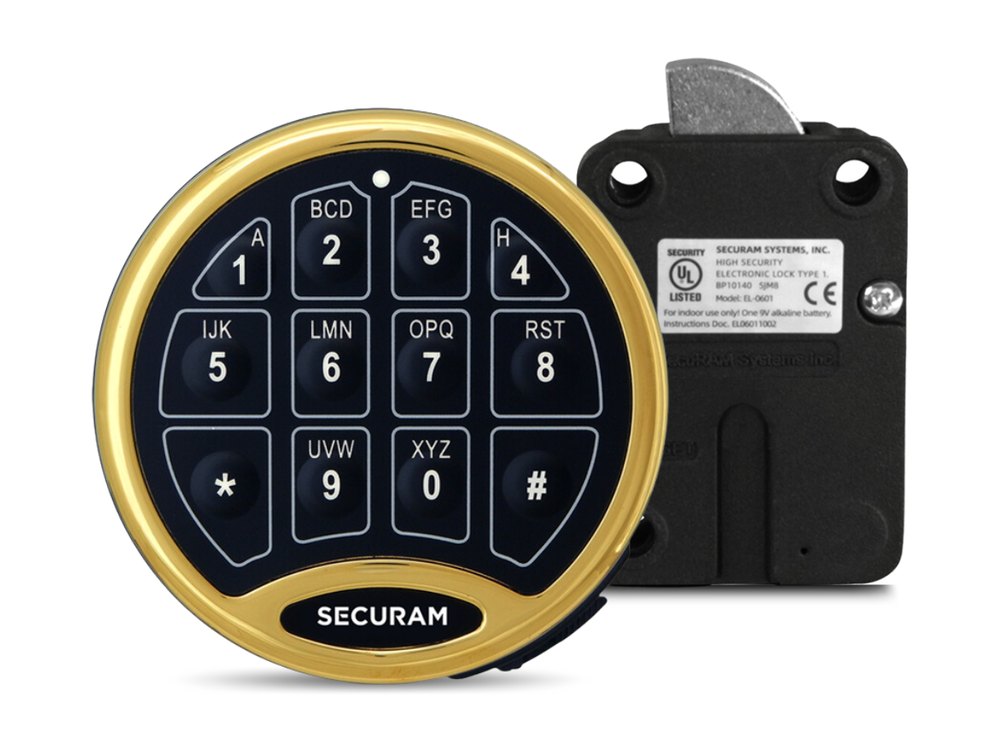 Securam SafeLogic Basic (gold ring)The same keypad with a gold ring.Battery · Code · Beeps →
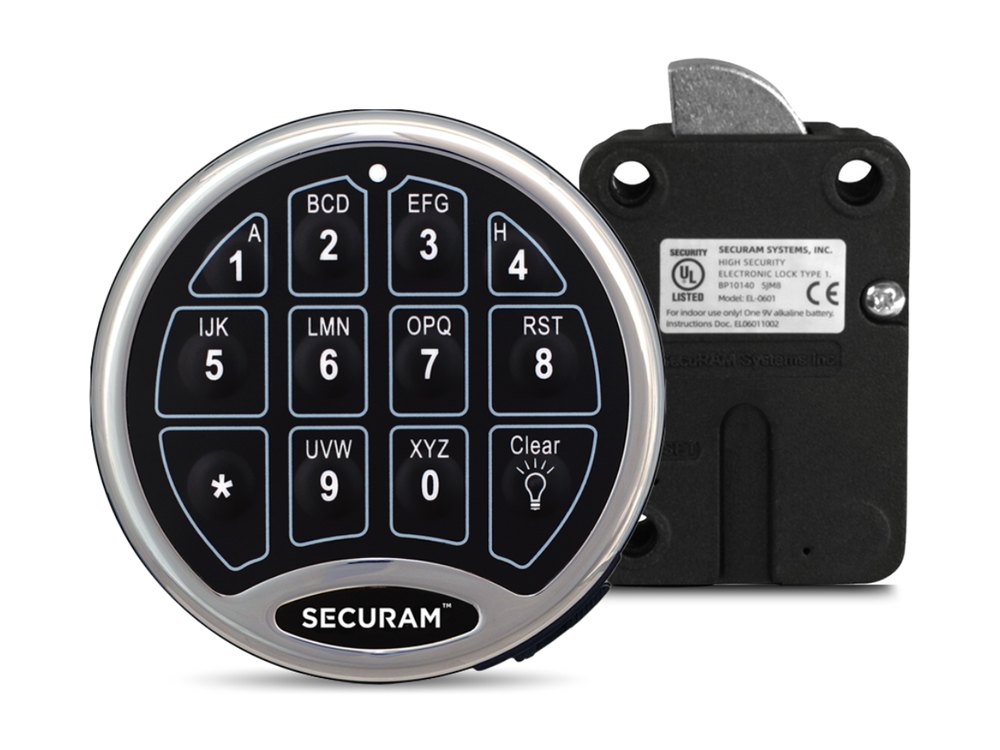 Securam SafeLogic BackLitRound keypad with a lit bulb key and a battery drawer at the bottom.Battery · Code · Beeps →
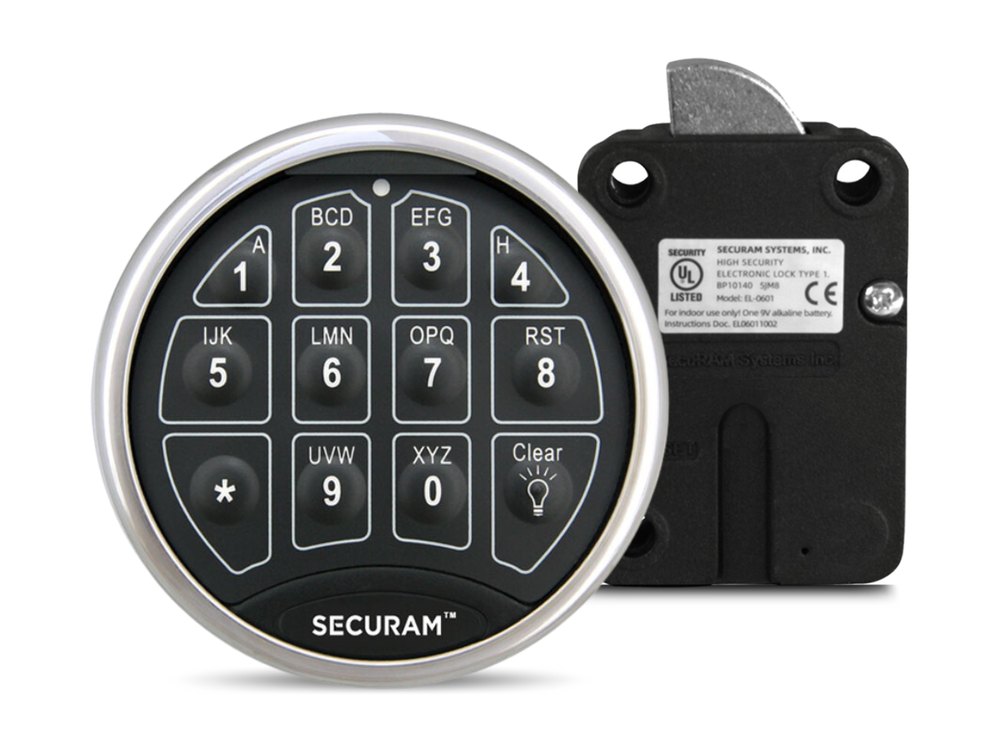 Securam SafeLogic TopLitRound keypad with two small lights at the top. Battery is behind a twist-off ring.Battery · Code · Beeps →
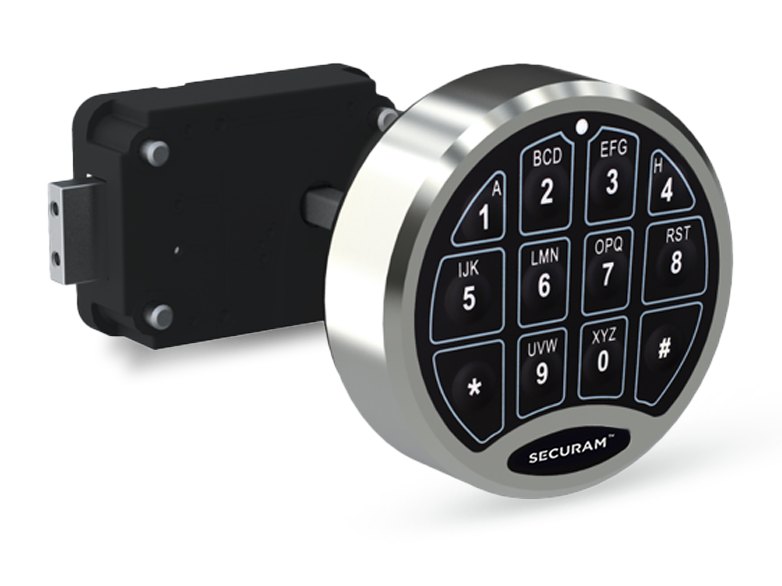 Securam SafeLogic Basic Direct DriveRound keypad that you turn after the code. Deadbolt lock body behind the door.Open · Code · Beeps →
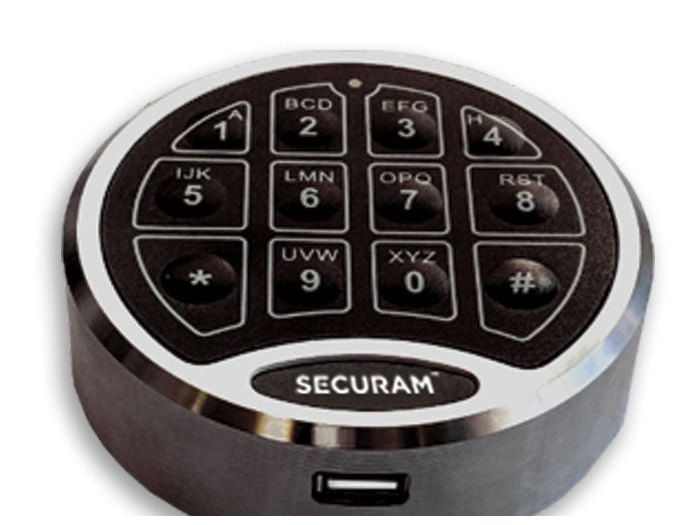 Securam SafeLogic C10 Direct DriveThe same turning keypad, with a manager and up to 8 user codes.Open · Code · Beeps →
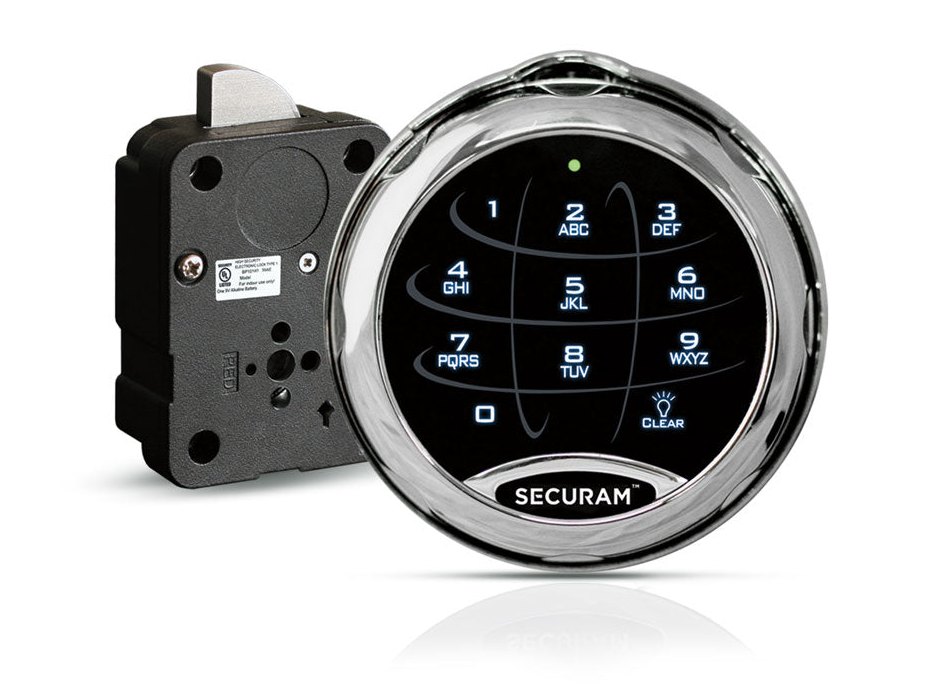 Securam SafeLogic XtremeRound keypad on a ring with a spin dial. Opens by code or by dial combination.Open · Code · Dial →
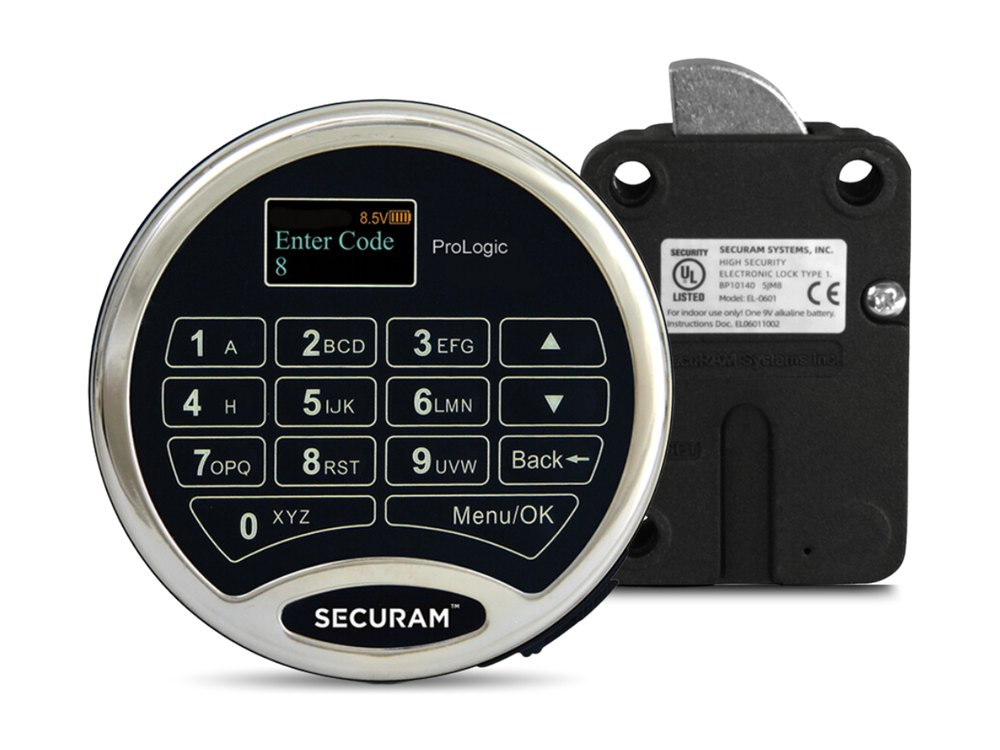 Securam ProLogic L01 / L02 / L22 / L62 / L66 / E66Round keypad with a small screen, arrow keys and Menu/OK.Open · Code · Messages →
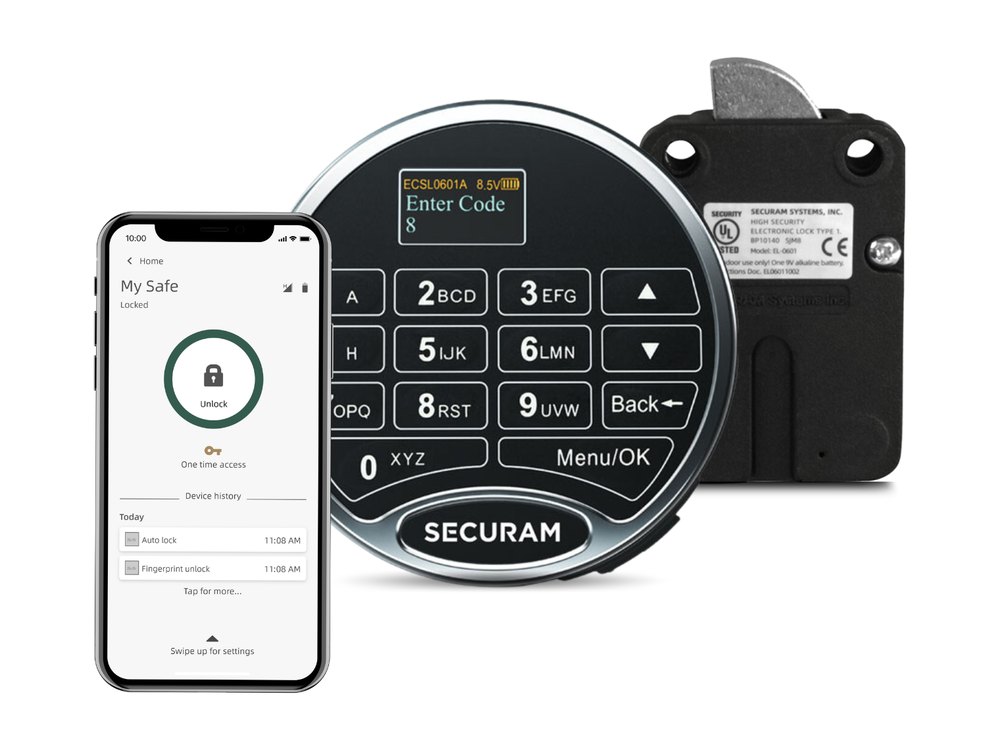 Securam ProLogic Smart B22The same screen keypad, paired with a phone app. Press Menu/OK after the code.Open · Code · Messages →
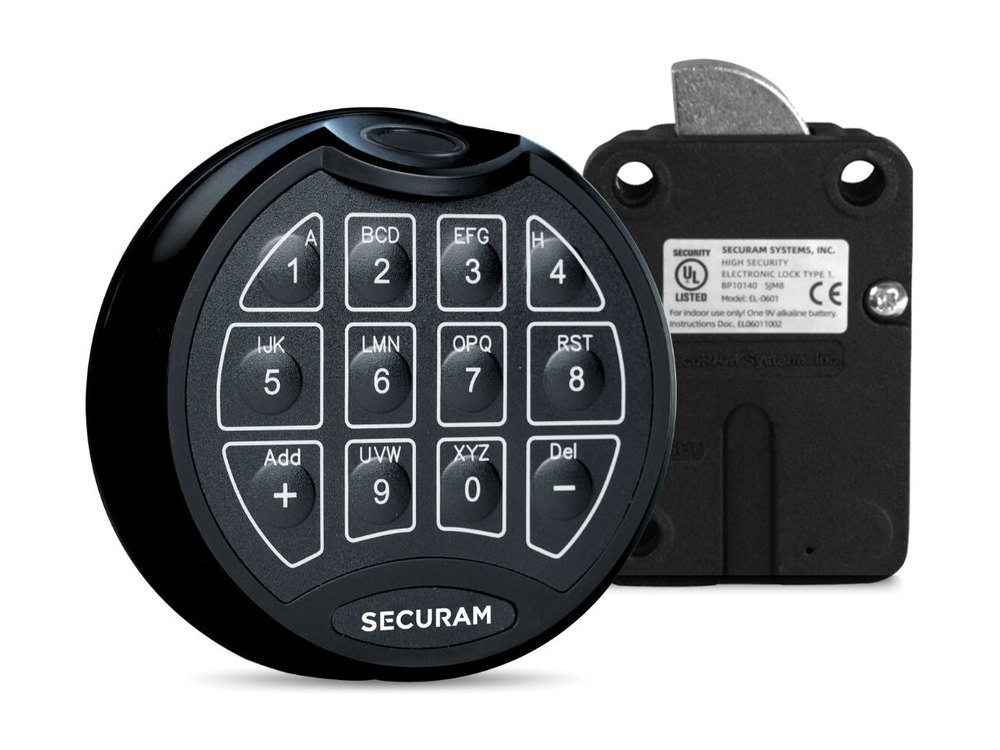 Securam ScanLogic BasicRound keypad with a fingerprint reader at the top and +/- keys. No screen.Open · Code · Battery →
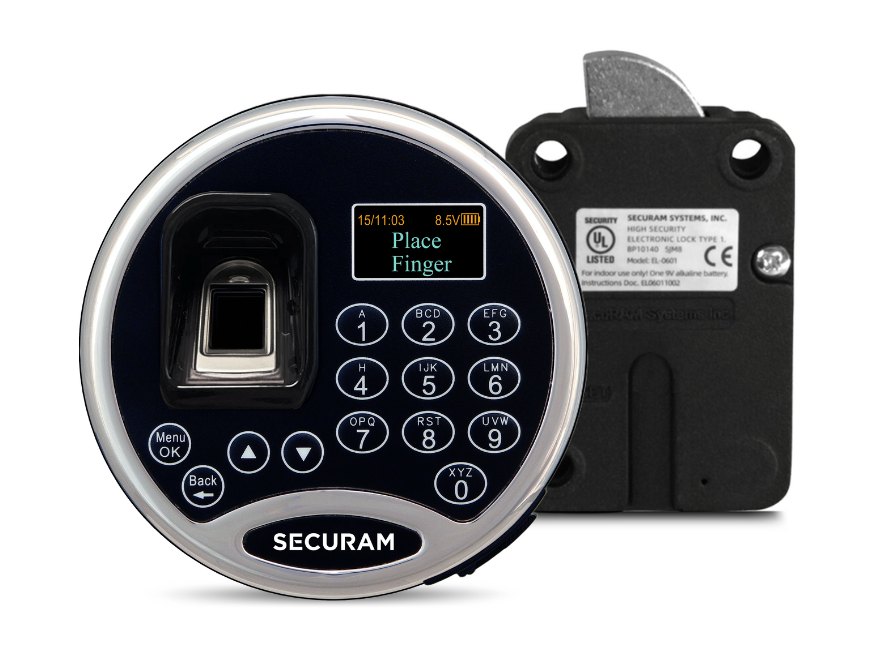 Securam ScanLogic D02 / D22 / D66Fingerprint reader on the left, small screen, arrow keys and Menu/OK.Open · Code · Battery →
Hollon Safe
We are a Hollon Safe dealer. These are the keypads on Hollon’s home, office, and fire and burglary safes. Many Hollon safes also have an S&G lock (Spartan or Titan) or a Securam lock (SafeLogic, ProLogic or ScanLogic): find yours in the Sargent & Greenleaf or Securam section.
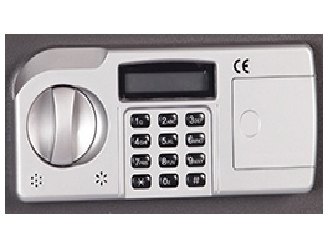 Hollon Home safe keypadLCD above a 12-key pad, round knob at the left, battery cover at the right.Open · Code · Battery →
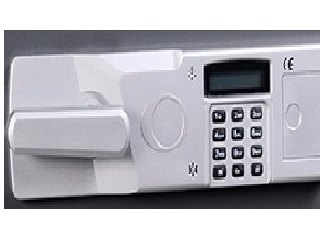 Hollon Office safe keypadLCD above a 12-key pad, long lever handle at the left, battery cover at the right.Open · Code · Battery →
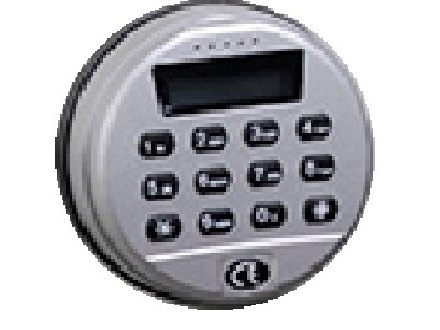 Hollon Fire & Burglary safe keypadRound keypad with an LCD screen and a CE mark. Four AA batteries.Open · Code · Battery →
Mesa Safe
We are a Mesa Safe dealer. Mesa uses these electronic locks on its gun safes, fire safes, depository safes, hotel safes and wall safes.
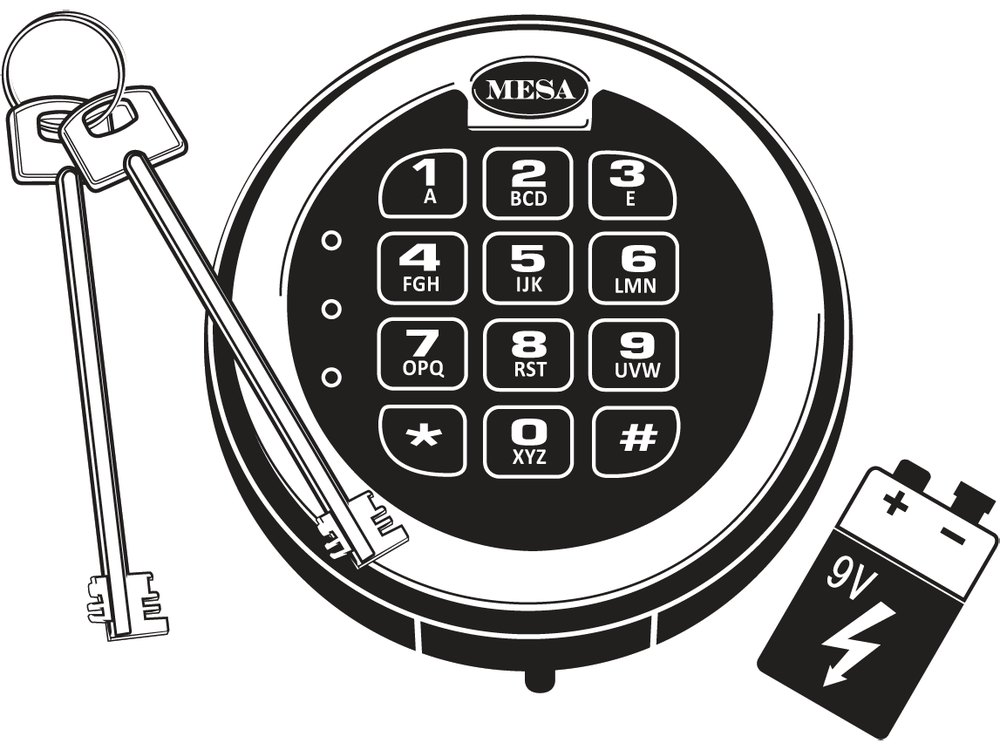 Mesa MSL-50 / MSL-50-PRound keypad with the MESA name, three small lights and * and # keys. 9-volt battery.Open · Code · Battery →
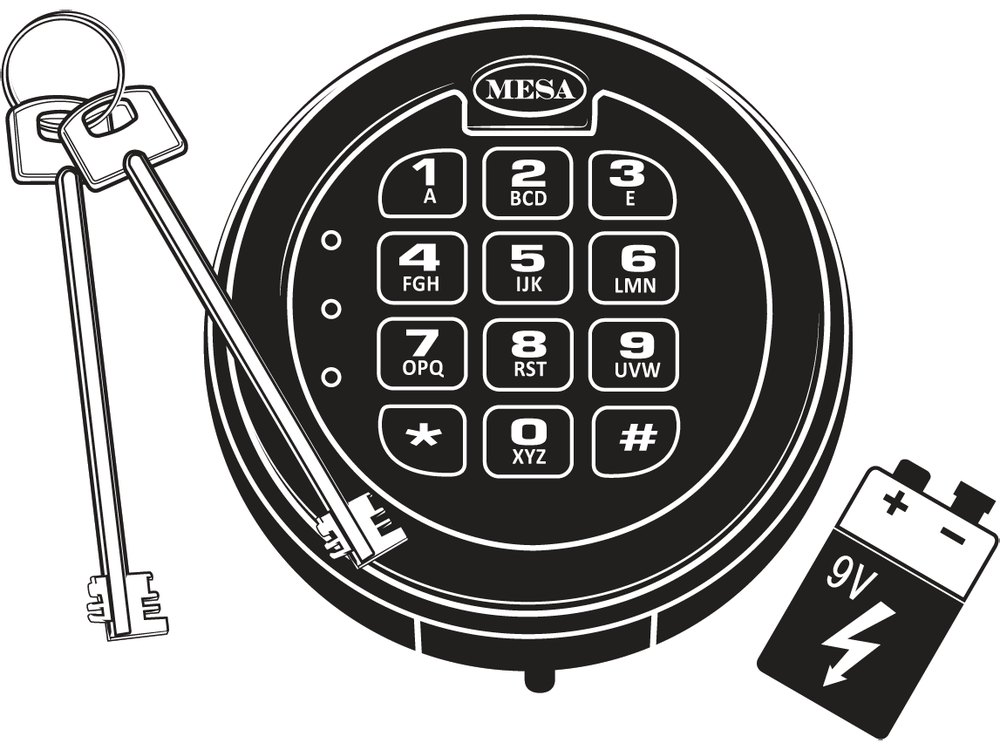 Mesa MSL-5Round keypad with the MESA name and three small lights. One 6-digit code.Open · Code · Battery →
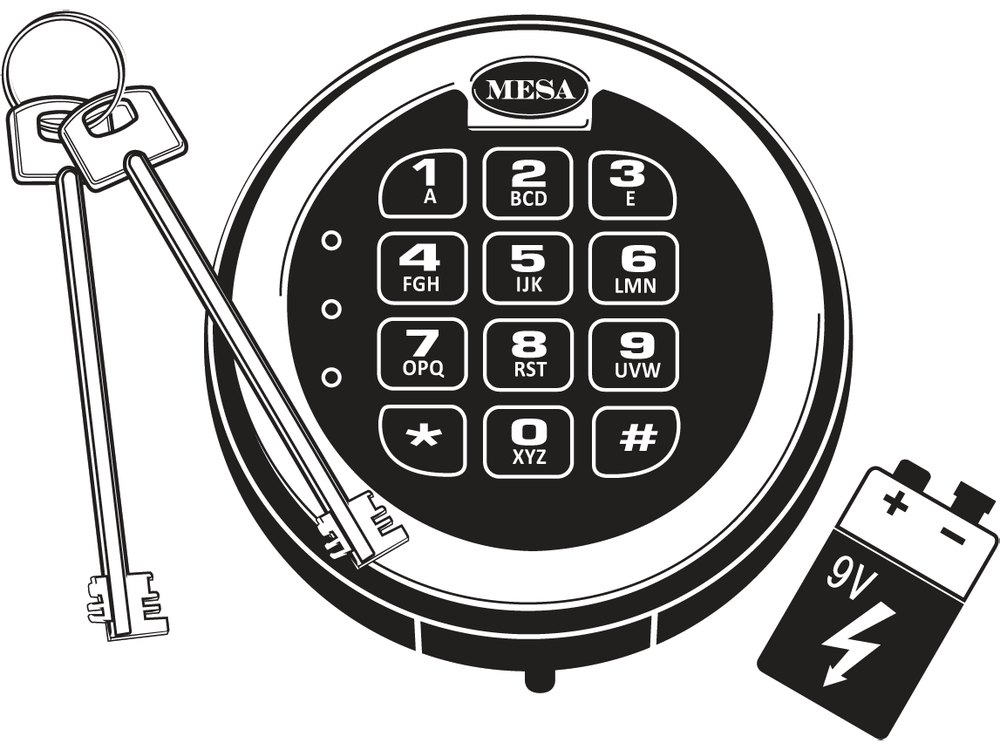 Mesa MSL-500 / MSL-500-PRound keypad with the MESA name, three small lights, * and # keys. Six codes.Open · Code · Battery →
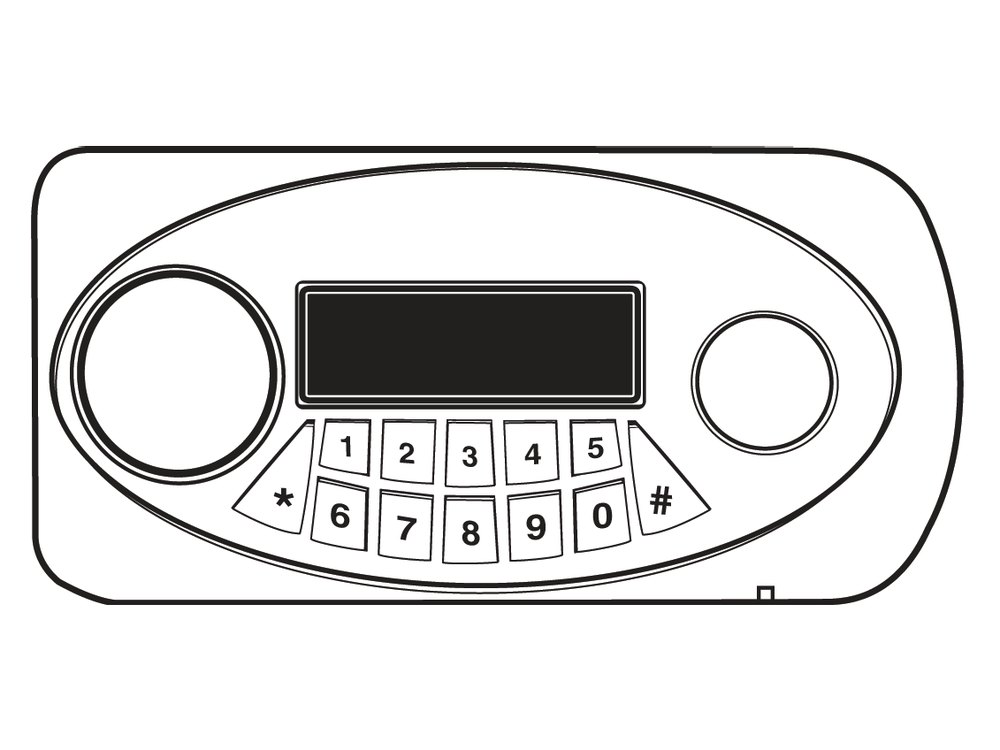 Mesa MF series (MSL-MF2)Oval keypad with an LCD screen and two round spaces. Four AA batteries.Open · Code · Battery →
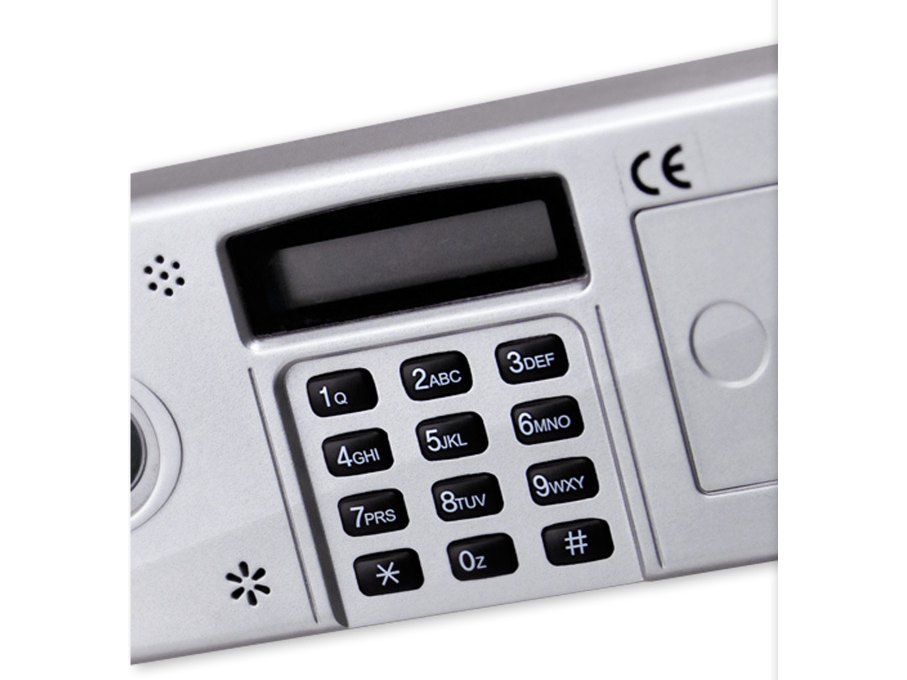 Mesa MFS-1 / MFS-2Rectangular keypad with an LCD screen and a battery cover at the right.Open · Code · Battery →
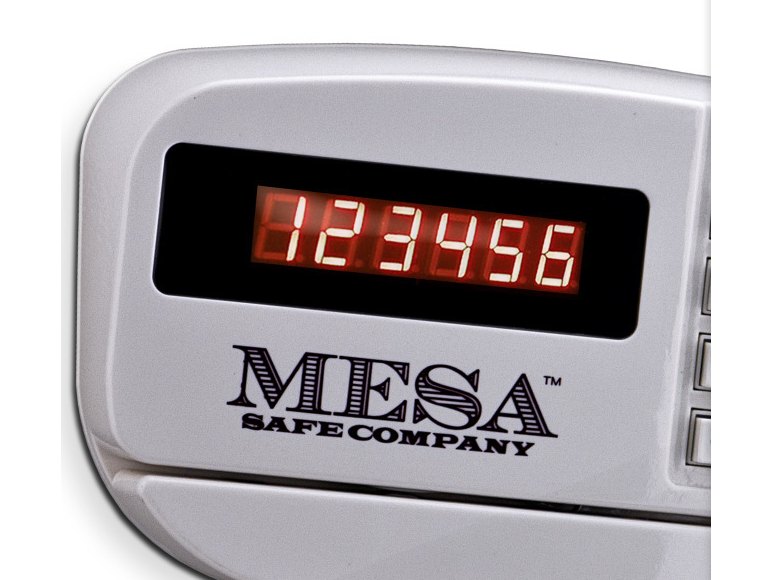 Mesa MH101E / MHRC916ERed number display above a 12-key pad, with a card-swipe slot. Hotel-room safe.Open · Battery · Messages →
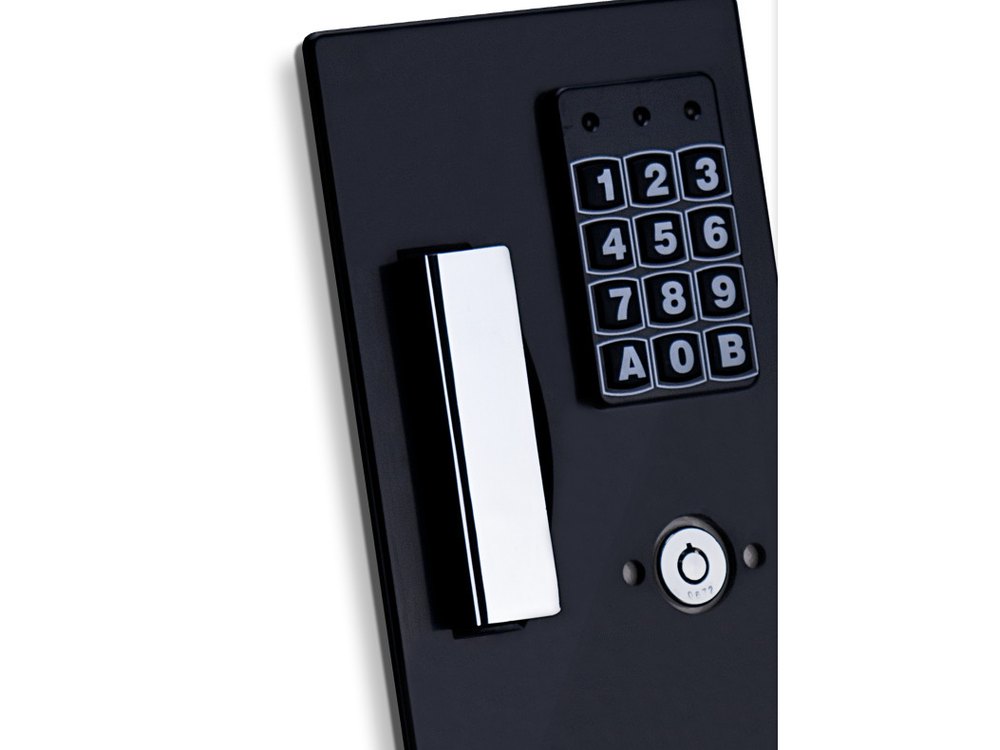 Mesa MAWS2113E wall safeBlack keypad with three small lights, keys 1 to 9, A, 0, B, and a key lock below.Open · Code · Battery →
LA GARD (dormakaba)
LA GARD makes some of the most common electronic safe locks. Find the keypad that looks like yours: the 3000, 3035 and 3125 (Basic and ComboGard Pro locks), the 5715, 5750 and 5750-K (ComboGard Pro and AuditGard locks), and the 700 Series (700 Basic, 702, 703, 704 and 705).
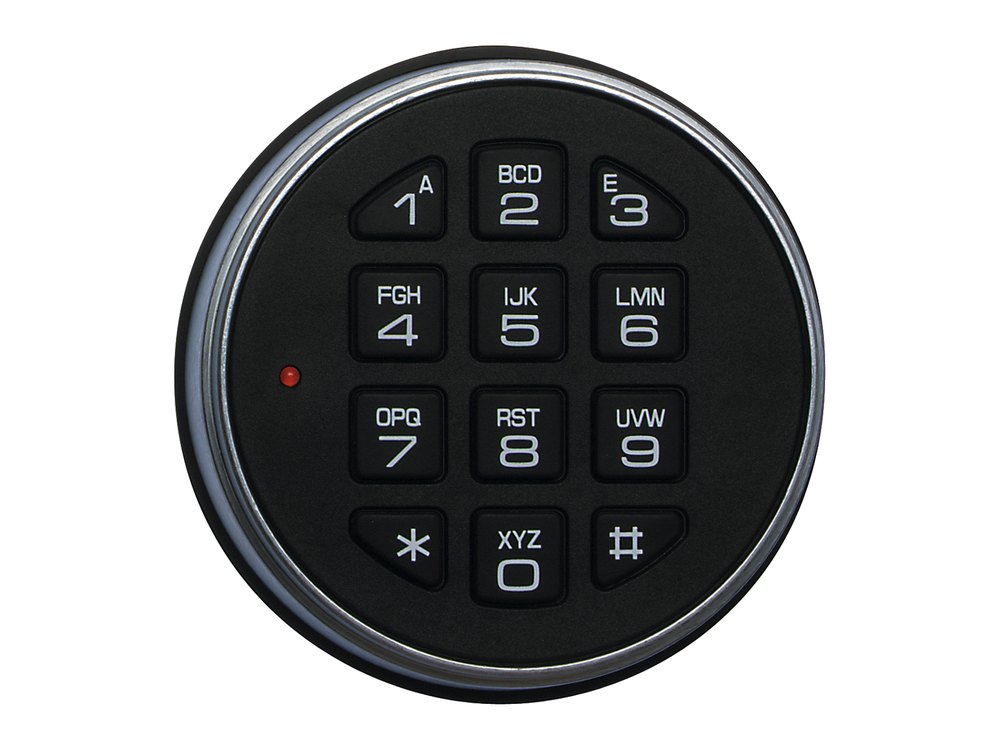 LA GARD 3000 / 3035 / 3125Round keypad with letters on the keys and a small LED. Basic and ComboGard Pro locks. 9-volt battery.Open · Combination · Battery →
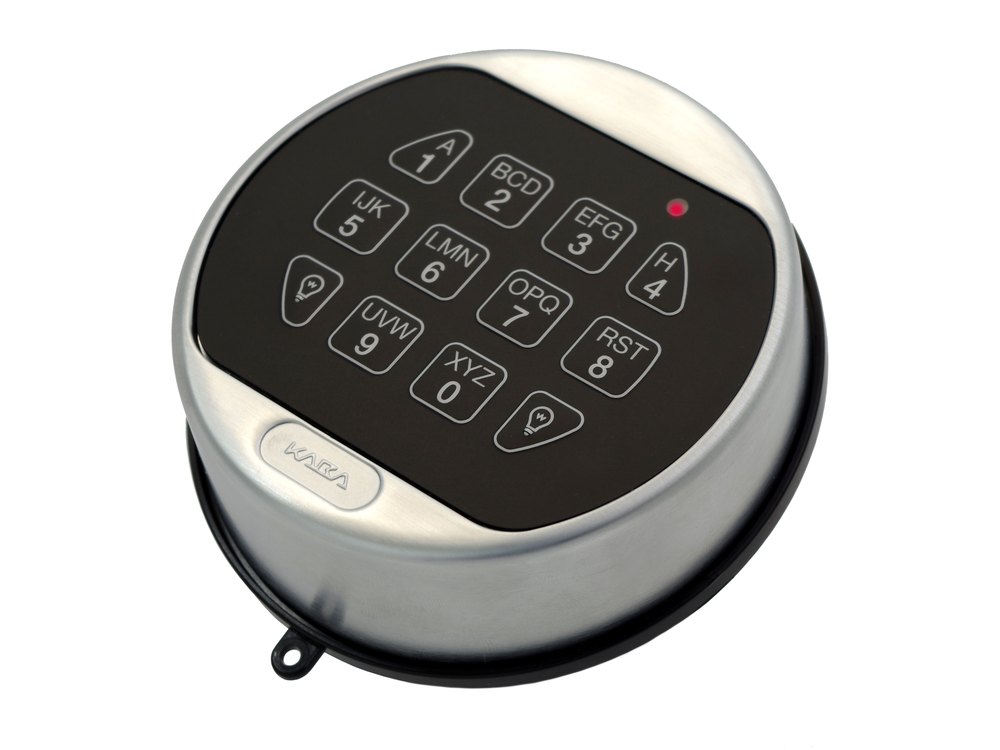 LA GARD 5715 / 5750Slanted round keypad with two light-bulb keys and a red LED. ComboGard Pro and AuditGard locks. 9-volt battery.Open · Combination · Battery →
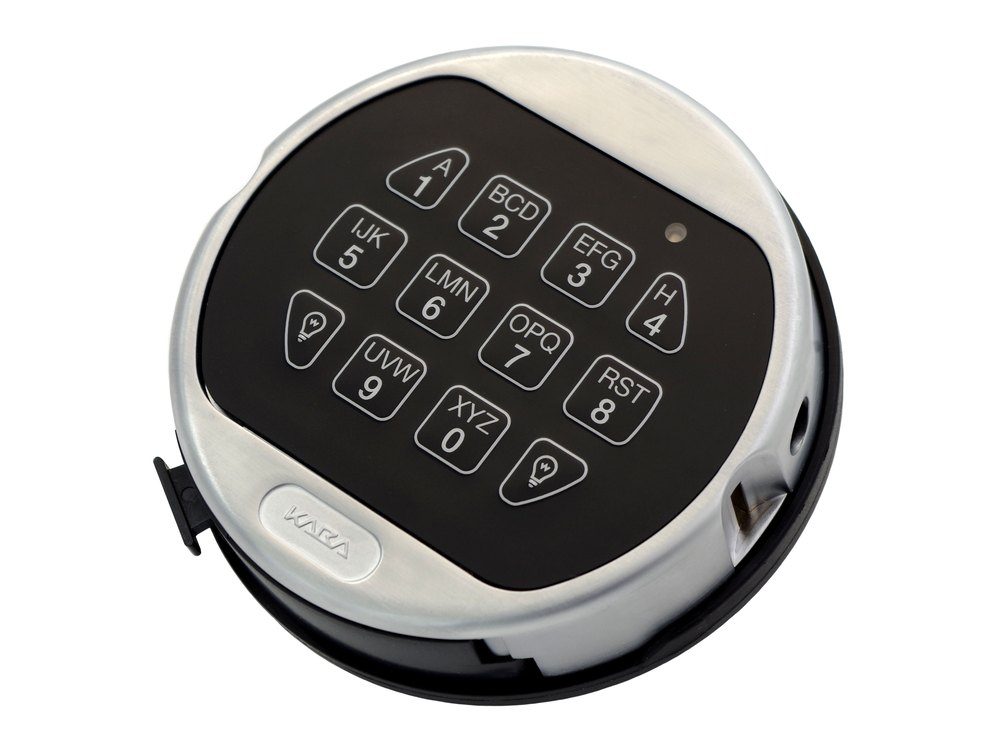 LA GARD 5750-KThe same keypad with a small eKEY port on the side.Open · Combination · Battery →
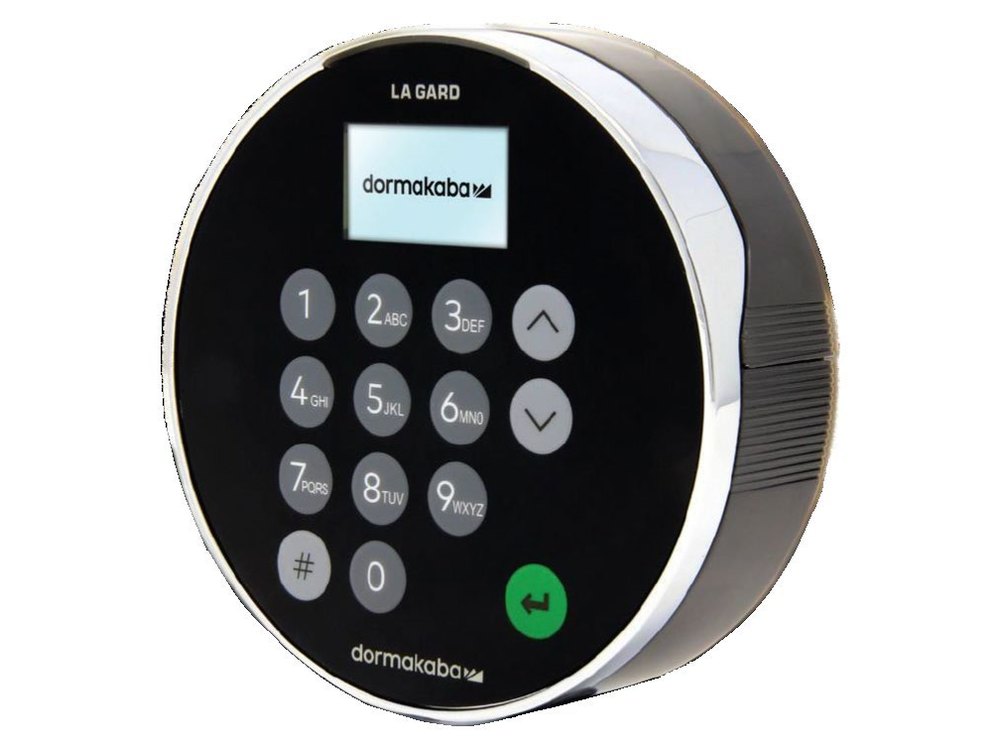 LA GARD 700 Series (display keypad)Round keypad with a small screen and up/down arrow keys. User ID and combination.Open · Combination · Battery →
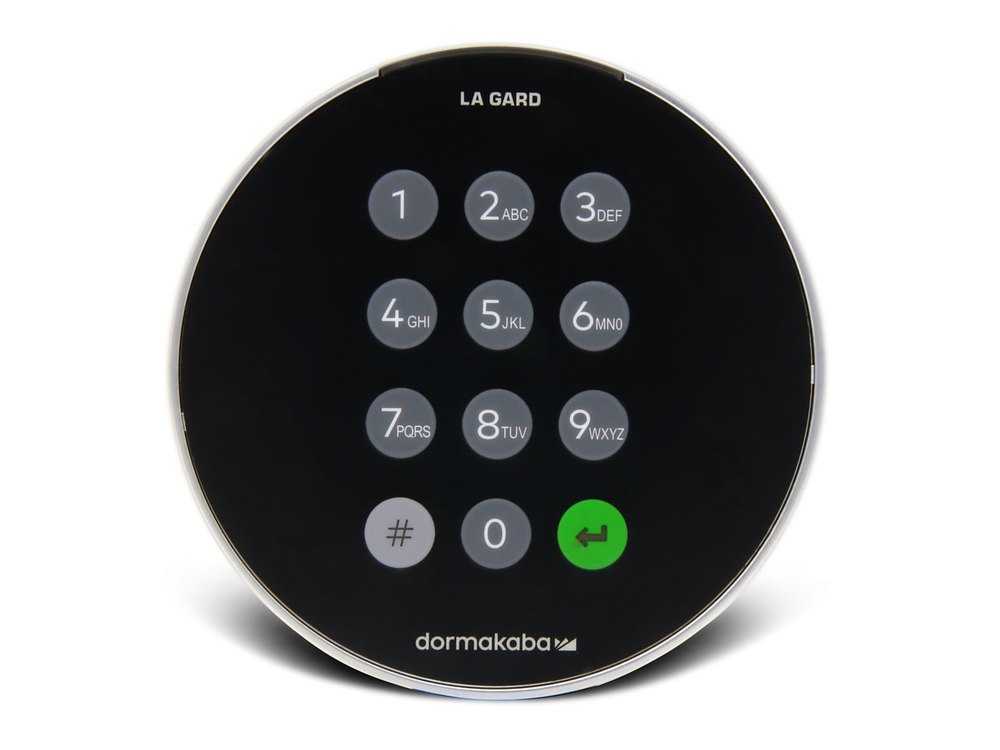 LA GARD 700 Basic / 702 (no display)Round keypad with number keys, a # key and a green Enter key. No screen.Open · Combination · Battery →
Kaba / dormakaba (Auditcon, Axessor)
Kaba and LA GARD are now part of dormakaba. Auditcon and Axessor are commercial safe locks used on safes across the country. LA GARD has its own section above.
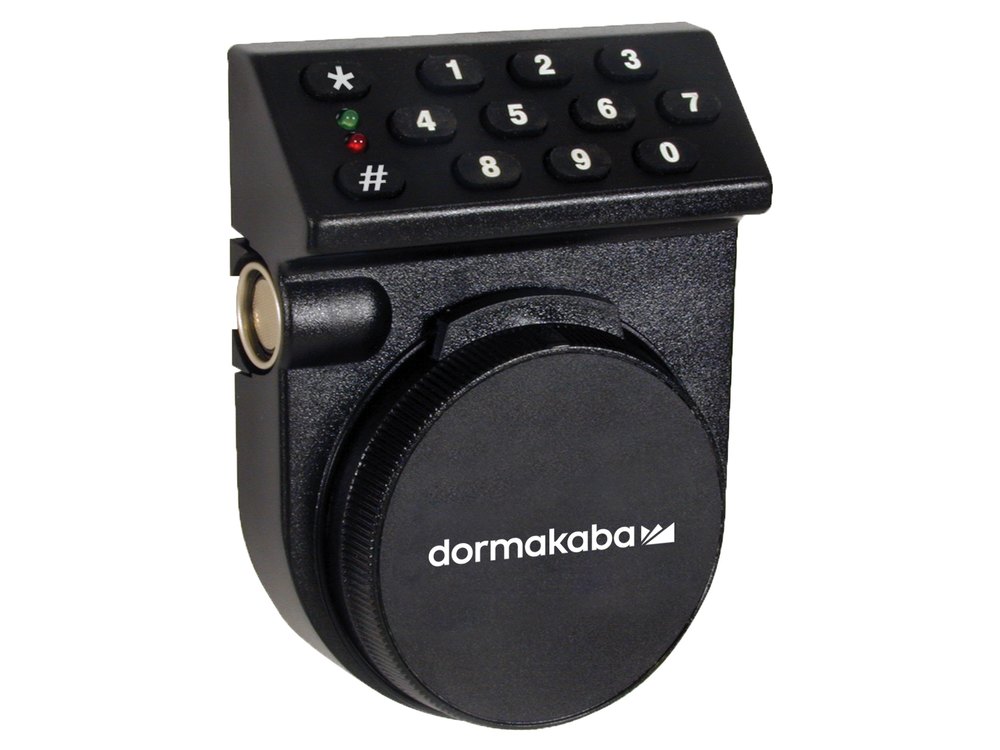 Kaba Auditcon 252 / 552Keypad above a dial. You turn the dial to power it. A user ID and PIN.Open · PIN · Lights →
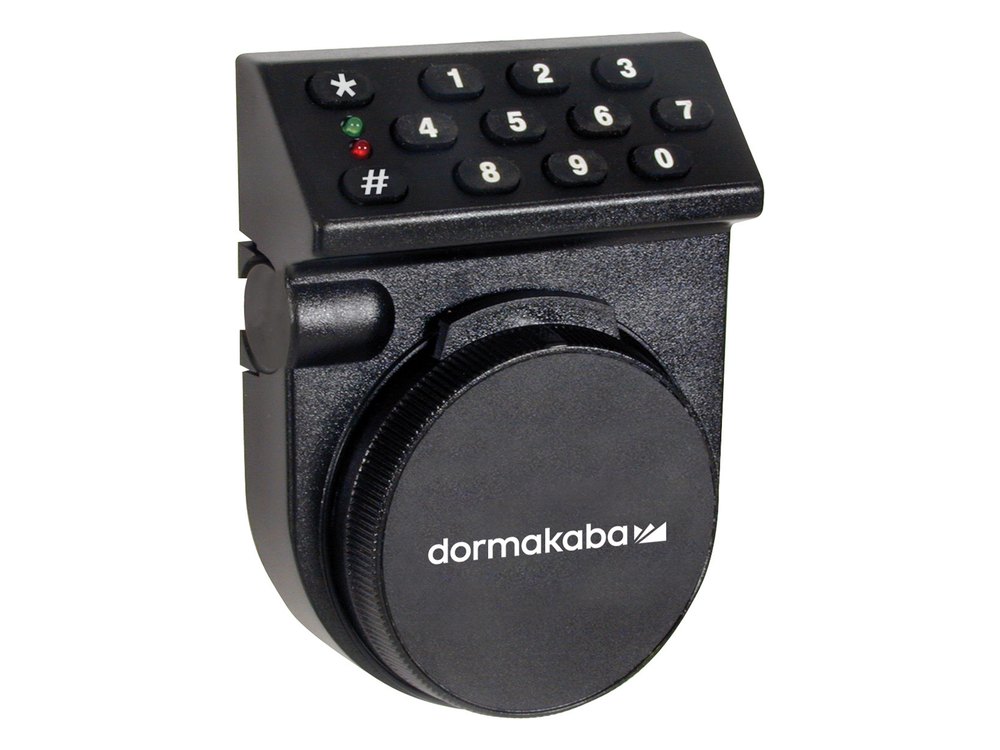 Kaba Auditcon 52 / T52The same keypad and dial with a single combination. No battery.Open · PIN · Lights →
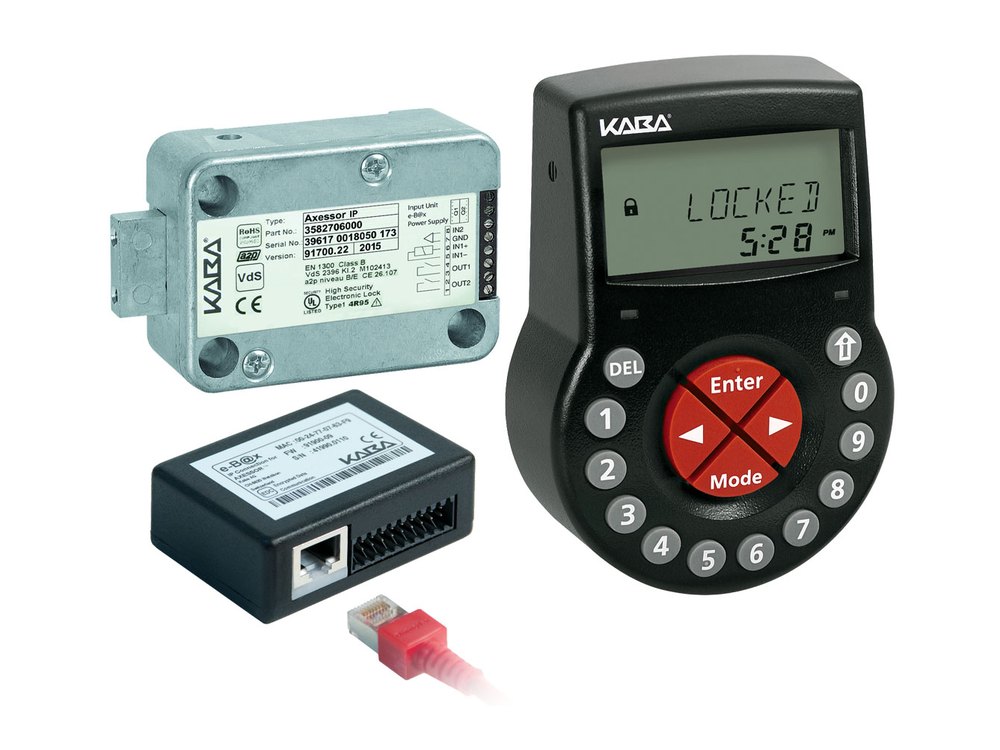 dormakaba AxessorBlack input unit with an LCD, a red Enter key and a DEL key. 3 AA batteries.Open · Battery · Messages →
Kaba Mas X-series (government / GSA)
The X-07 to X-10 locks are sold mostly for government and contractor safes through the GSA program.
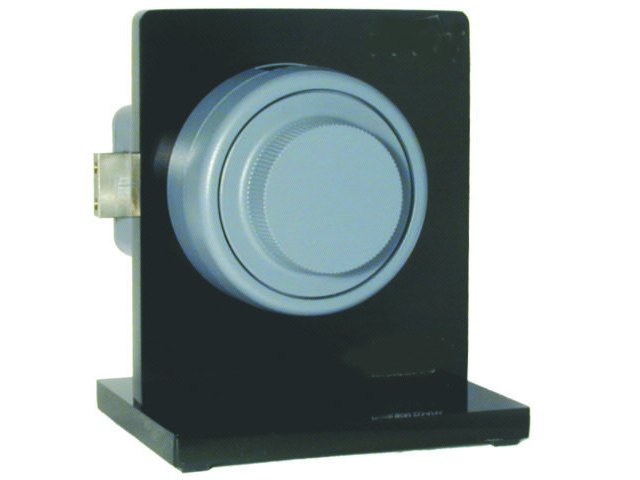
NL and LP locks
NL electronic locks (sold under the LP name and others) come with several different keypads.
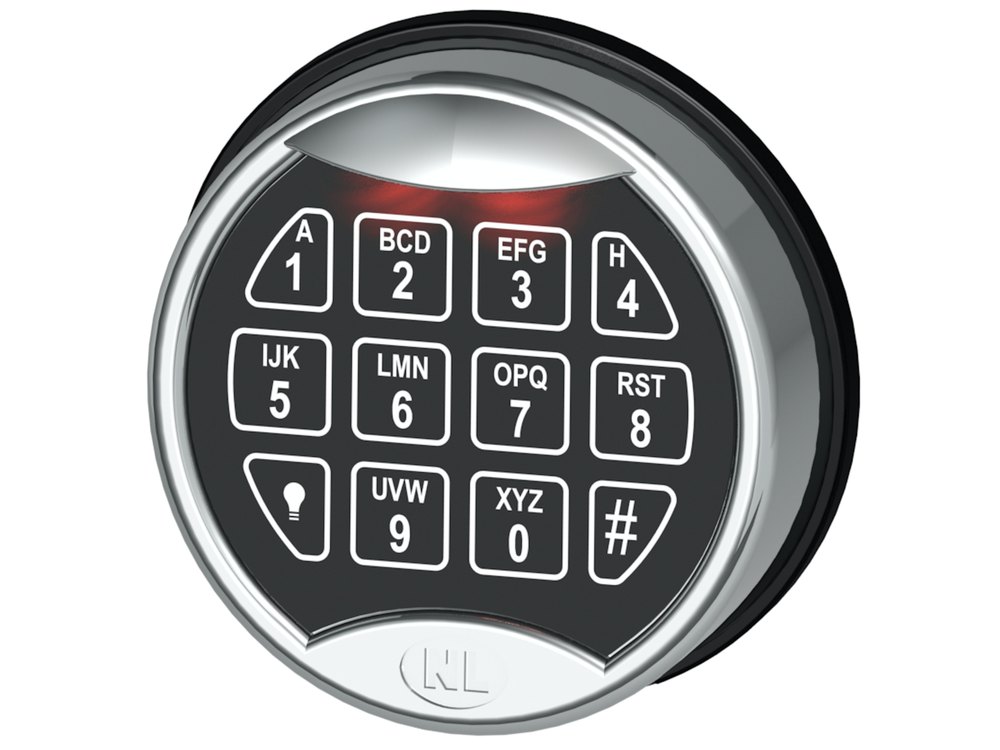 NL PremierLight button at the lower left. Battery drawer slides open at the bottom.Battery · Code · Signals →
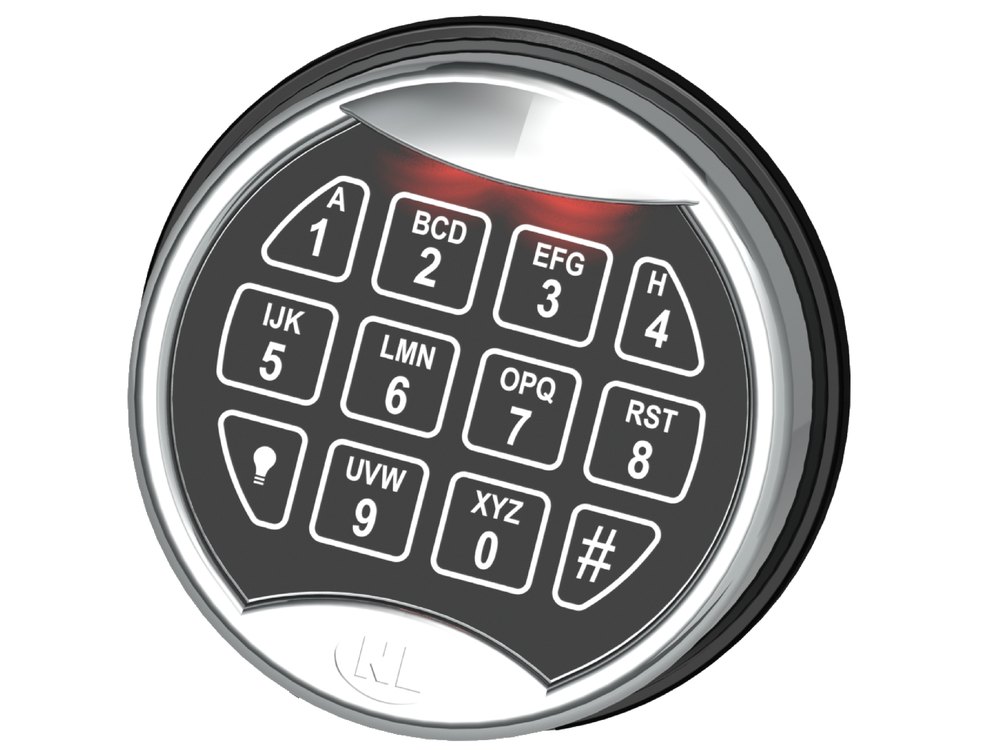 NL Rotating PremierSame face, but you turn the keypad to the right to open. One 9-volt battery.Battery · Code · Signals →
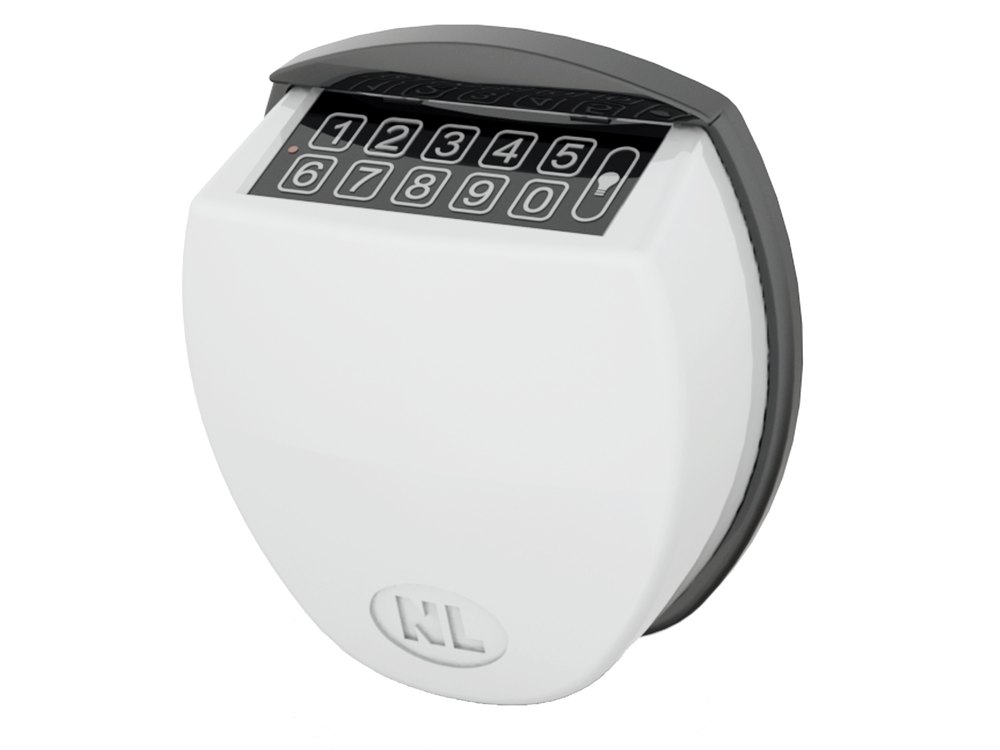 NL QuickTouchSmooth touch keypad in a domed housing. Battery compartment pulls down.Battery · Code · Signals →
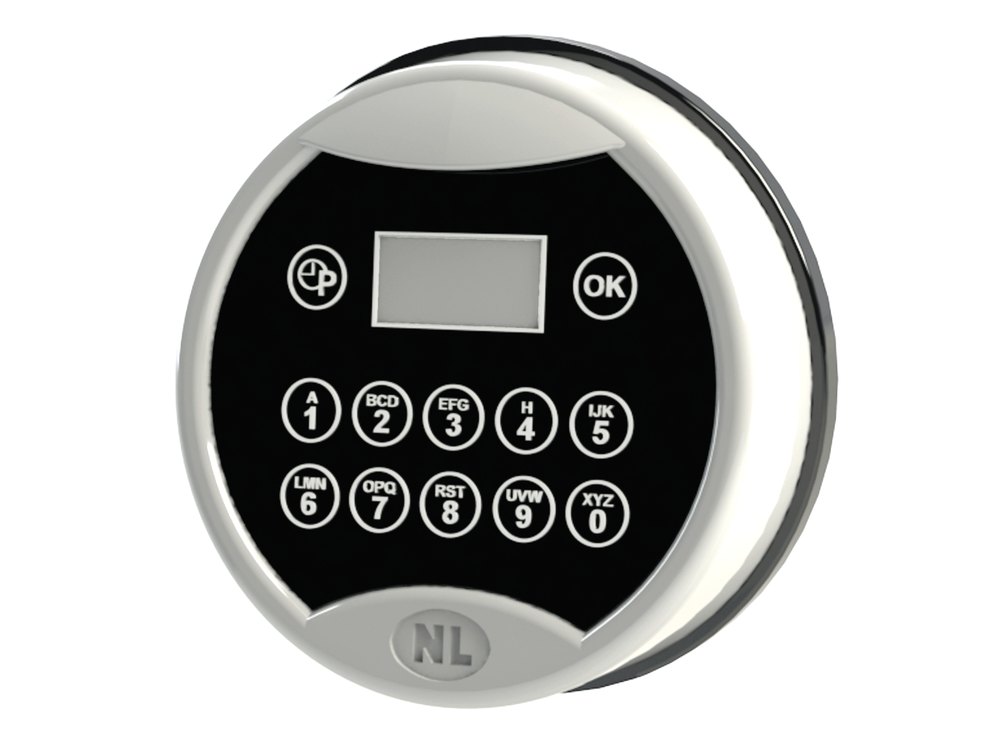 NL LockONERound keypad with a small display and an OK key. One-time codes. 9-volt battery.Open · Battery · Messages →
Tecnosicurezza (Pulse Next)
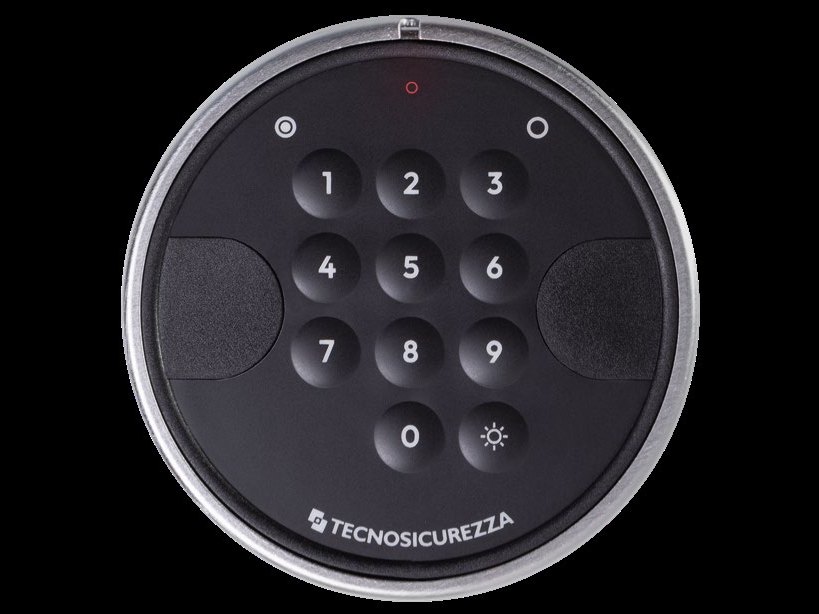
Italian-made keypad locks that are common on bank, ATM and retail safes. The Pulse Next is a round keypad with a sun-shaped backlight key and no screen.
Burg-Wächter (Germany)
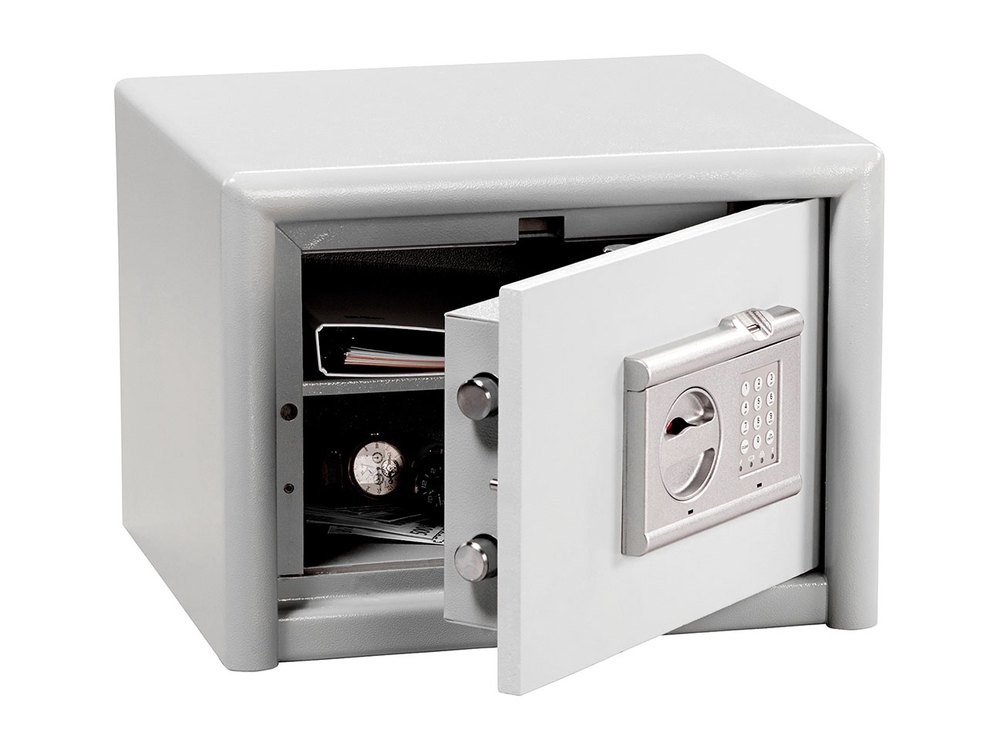 Burg-Wächter Combi-Line Fingerscan (TRSE10)Keypad, rotary handle and a finger sensor at the top. Opens by code or fingerprint. 3 AA batteries.Open · Code · Battery →
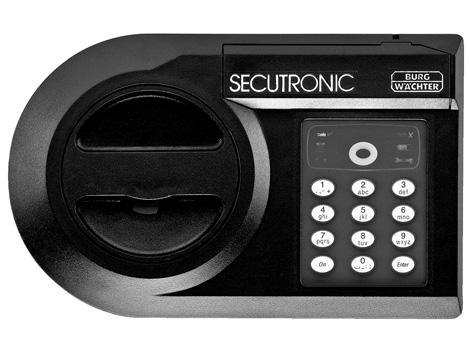 Burg-Wächter SecuTronic (lights)Keypad and a knob. Small icon lights, no display. 3 AAA or 3 AA batteries.Open · Code · Battery →
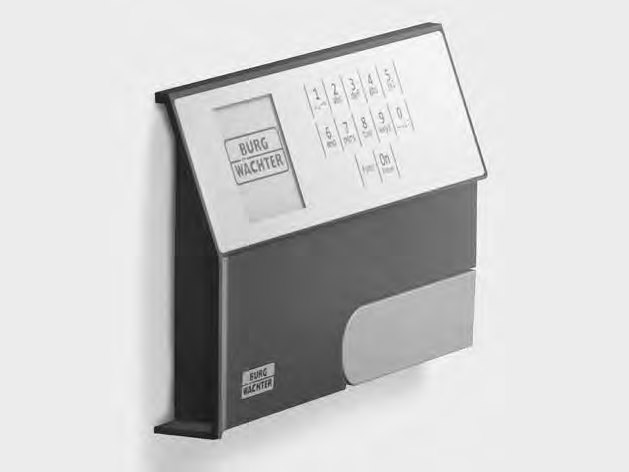 Burg-Wächter SecuTronic with displayA small screen, number keys, Func and On/Enter keys. 4 AA batteries.Open · Code · Battery →
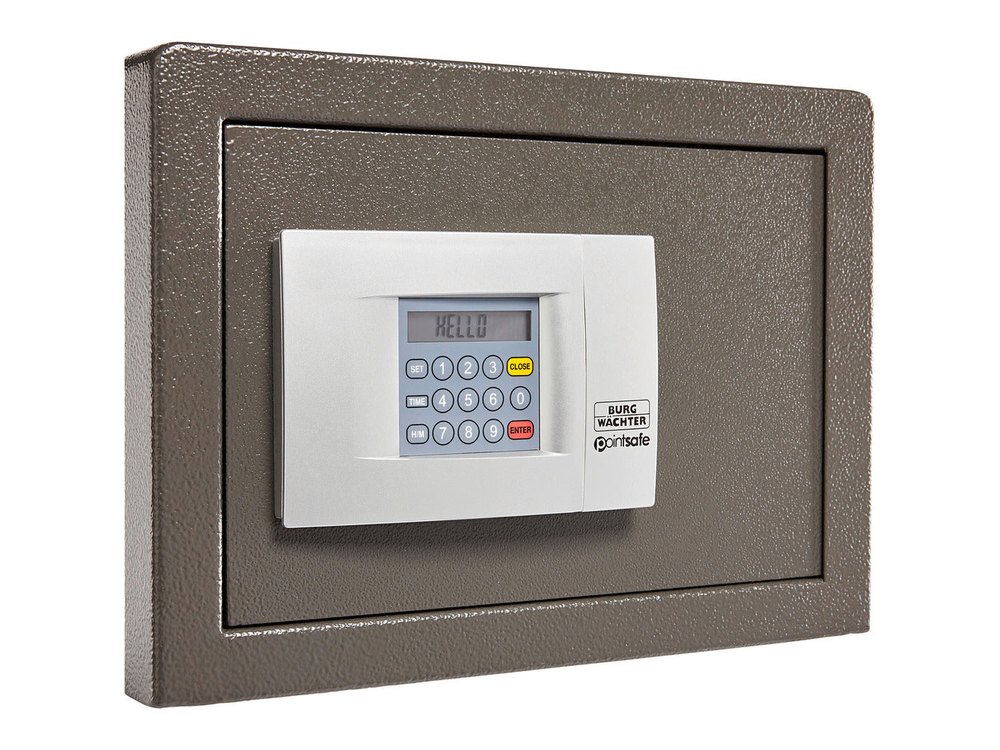 Burg-Wächter PointSafeDisplay with Enter and Close buttons. Four AA batteries.Battery · Code · Display →
Mechanical dial locks
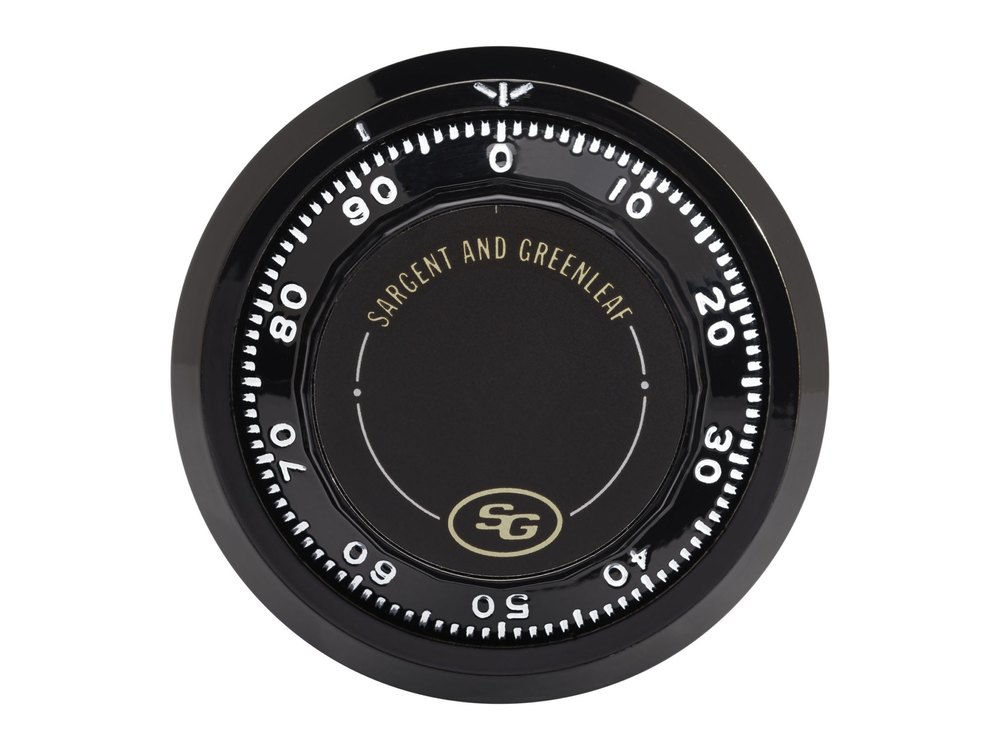
No batteries and no keypad: just a dial. This guide covers how to dial a combination open.
Quick answers
Why won’t my safe open even though the keypad beeps?
Usually one of two things: batteries that are strong enough to run the keypad but too weak to drive the lock’s motor or solenoid, or pressure from the safe’s bolts on the lock bolt. Replace the batteries, and turn the handle fully to the locked position before you enter the code.
Will I lose my code when I change the battery?
Usually not, but it depends on the lock. Sargent & Greenleaf says its locks keep your codes during a battery change, and AMSEC stores the code in permanent memory. Burg-Wächter Basic, Smart and Universal safes are the exception: you must set the code again after the batteries go in. Each guide says what applies to that lock.
Where is the battery?
It depends on the lock. Some keypads twist off the door, some have a sliding cover, and some are inside the door. Each guide shows where yours is.
How often should I change the battery?
Most manufacturers recommend once a year, with fresh alkaline batteries, to avoid corrosion from leaking batteries.
I forgot my code. Can you help?
Please do not keep trying: repeated wrong codes trigger a lockout. Call us and we will go over your options.
Don’t see your keypad?
Your lock may not be listed yet. Send us a photo or call and we will tell you what it is and how to work it. If you can read a name or model number on the keypad, that helps too.
Need a hand?
Still stuck? We can help.
Having a hard time getting into your safe? Our technicians are trained to open malfunctioning safes professionally, so your valuables can still be safely secured. Call us or stop by.
Steve’s Lock, Safe and Alarm · 3401 N. Sepulveda Blvd, Manhattan Beach, CA 90266
About this guide. This is an independent guide from Steve’s Lock, Safe and Alarm, a safe and lock dealer. Brand and model names belong to their owners and are used only to help you identify your lock. We are not affiliated with the manufacturers. These steps summarize the manufacturers’ own instructions; your lock may be a different version, so if anything here does not match what your lock does, follow your manual or call us. Always change codes with the safe door open, and test the new code several times before you close the door.